


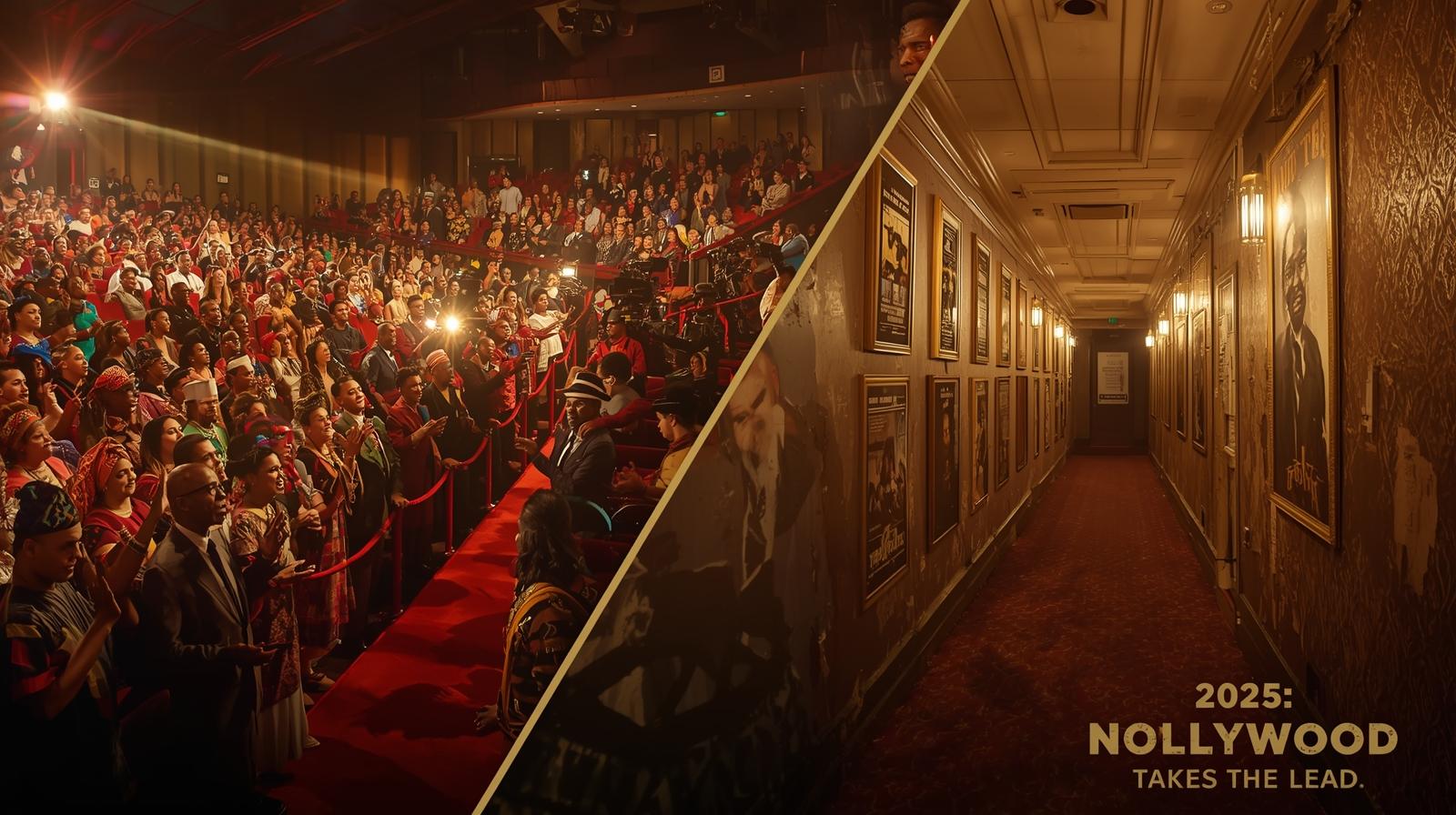
For decades, Nigerian cinema lived in the shadow of Hollywood. Local films carried cultural weight but struggled to match the global marketing power and cinematic polish of imported blockbusters. Nollywood was often framed as passionate but under-resourced — a “home video” industry fighting for screen space.
In 2025, that narrative changed.
According to the 7th Edition of The Nigeria Box Office Yearbook, an annual industry publication by FilmOne Entertainment documenting box office performance across Nigerian cinemas, the West African box office closed the year at ₦15.6 billion, with Nollywood’s market share nearly matching — and in several months surpassing — Hollywood’s dominance. Nigerian films didn’t just show up on cinema schedules this year. They owned the conversation.
The Billion-Naira Era Becomes a Strategy
What was once rare is now repeatable.
In 2025, two Nollywood titles — Behind The Scenes and Oversabi Aunty — crossed the ₦1 billion mark at the box office. This milestone signals a shift from lucky breakouts to deliberate commercial planning. Producers are now designing films with theatrical success in mind: release timing, audience targeting, marketing rollout, and star casting are treated as part of the storytelling process.
This new approach shows Nollywood’s growing confidence in cinema as a sustainable revenue engine, not just a prestige platform.
Cinema Became a Cultural Event Again
Ticket prices rose to an average of ₦5,596 in 2025, yet audiences still showed up for local films. The reason was not affordability. It was belonging.
Filmmakers like Funke Akindele and Toyin Abraham mastered what industry observers now describe as the “Cinema Event.” Their films are marketed like cultural moments — with social media countdowns, street activations, cast tours, and community-driven buzz that turns opening weekend into a shared experience.
The cinema became a town square again.
People came to laugh together, debate together, and feel seen together.
For Nigerian audiences navigating economic pressure, Nollywood films offered something Hollywood rarely could: emotional familiarity.
The Rise of Nollywood’s Bankable Stars
2025 confirmed that Nollywood now has its own version of Hollywood’s box office economy: the bankable lead.
Actors such as Funke Akindele, Toyin Abraham, Timini Egbuson, and Odunlade Adekola consistently mobilized audiences regardless of genre or release window. Their names became economic signals — reassuring exhibitors, distributors, and investors that a film could pull crowds.
This shift reflects growing audience trust. Viewers no longer just follow trailers; they follow people whose storytelling instincts they believe in.
Authenticity Became the New Blockbuster
Hollywood titles experienced a slight softening in local dominance in 2025, not because global films lost quality, but because Nigerian audiences found deeper resonance in local stories.
The most successful Nollywood releases leaned into:
-
Family conflict
-
Political tension
-
Faith and survival
-
Youth hustle culture
-
Cultural memory and heritage
These themes didn’t just entertain. They reflected lived reality. In a challenging economic year, authenticity became more valuable than spectacle. Nigerian viewers chose stories that sounded like their own conversations.
Genres Expanded Beyond Comedy
Comedy remains Nollywood’s strongest commercial genre, but 2025 revealed growing audience appetite for variety.
Action-comedies like Gingerrr, political dramas like The Waiter, and culturally rooted epics like Ori: Rebirth proved that Nigerian audiences are ready to invest in range. This genre expansion is crucial for Nollywood’s long-term growth. It allows the industry to diversify risk and develop new storytelling languages for cinema.
Diaspora Audiences Changed the Revenue Math
Another driver of 2025’s success was smarter global distribution. Coordinated releases in Nigeria, the UK, and the US allowed Nollywood films to benefit from diaspora buzz and opening-weekend momentum.
For the first time at scale, Nigerian films were released not just locally, but as part of a global African audience strategy. This widened the revenue base and amplified cultural conversation across borders.
What 2025 Really Means for Nollywood
Nollywood did not overtake Hollywood by imitating it. It did so by becoming more itself.
2025 marked a shift in audience psychology. Nigerian cinema became a reflection of community, not just entertainment. The box office numbers tell a financial story — but the real victory was cultural.
The cinema is no longer just a screen.
It is a shared emotional space.
And in 2025, Nollywood claimed that space fully.
To read more from the 7th edition of the Nigeria Box Office Yearbook, click here
